What Is a Gondola Display Rack?
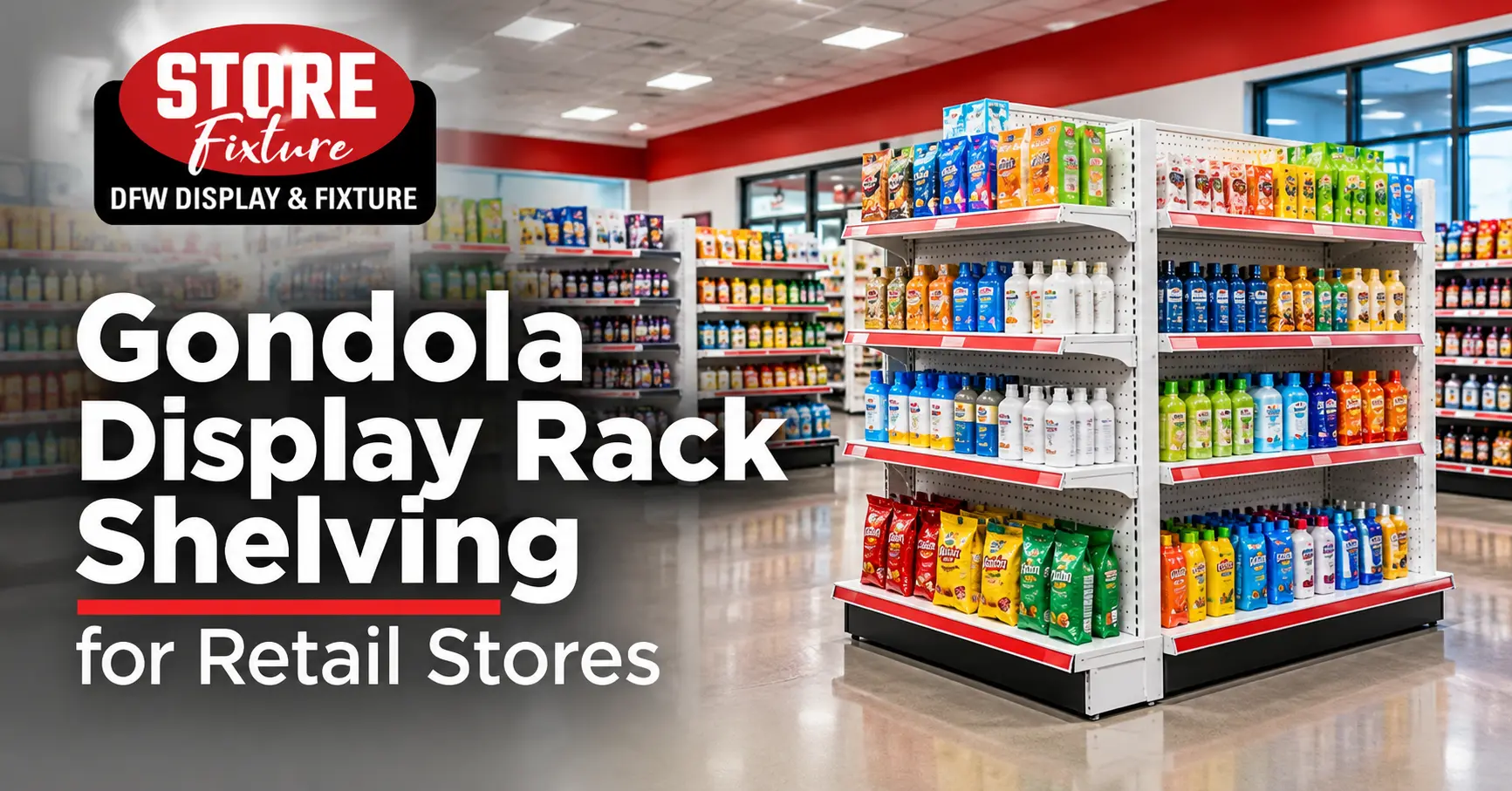
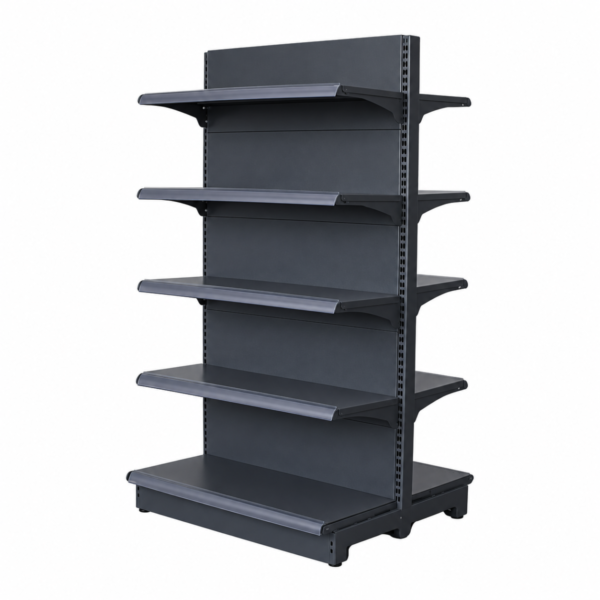
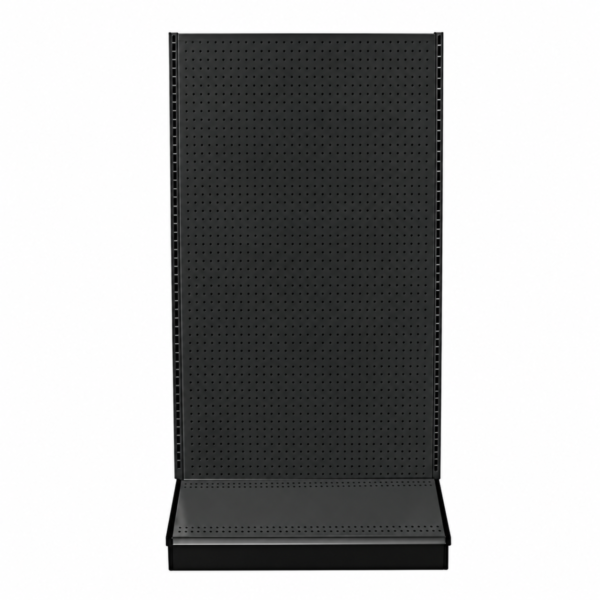
A gondola display rack is a modular, freestanding or wall-mounted shelving system made of a steel base, uprights, a back panel and adjustable shelves. The back panel is usually pegboard, so you can hang hooks as well as place products on shelves. Because every part follows the same system, you can start with one unit and keep adding to it.
Retailers choose gondola shelving because it does three things at once:
- Holds a lot of stock on several shelf levels in a small footprint.
- Displays products clearly at the heights shoppers reach most easily.
- Changes with your range, since shelves move up or down and hooks clip into the pegboard.
That flexibility is why the same gondola display rack can hold canned goods in a grocery aisle, snacks in a convenience store or hardware in a tool shop.
Types of Gondola Display Rack and Where Each One Goes
Choosing the right type comes first, because it decides where the rack can stand in your store.
Double-Sided Gondola Racks for Center Aisles
A double-sided gondola has shelves on both faces, so it forms the middle of an aisle and serves shoppers on each side. It is the standard choice for the center of the sales floor. Our double-sided gondola range includes black, white and wood finishes in 3 ft and 4 ft widths.
Wall Gondola Racks for the Store Perimeter
A wall, or single-sided, gondola has shelves on one face only and stands against a wall. It turns the perimeter of the store into display space and is often taller than center aisles, since it does not block sightlines. Browse our wall gondola shelving for starter and add-on units.
End Cap Gondola Units
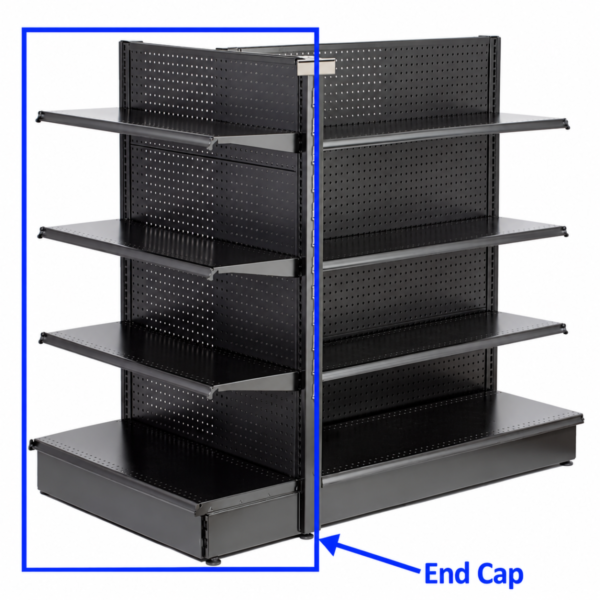
An end cap closes the end of an aisle and faces the main walkway. It is one of the most visible spots in the store, so retailers use it for promotions, new products and seasonal stock. See our end cap gondola units in black and beige.
Starter and Add-On Units
Gondola runs are built from two kinds of unit. A starter is a complete unit with uprights on both ends. An add-on shares an upright with the unit beside it, so each extra section costs less than a second starter. A typical aisle is one starter followed by as many add-ons as the run needs.