

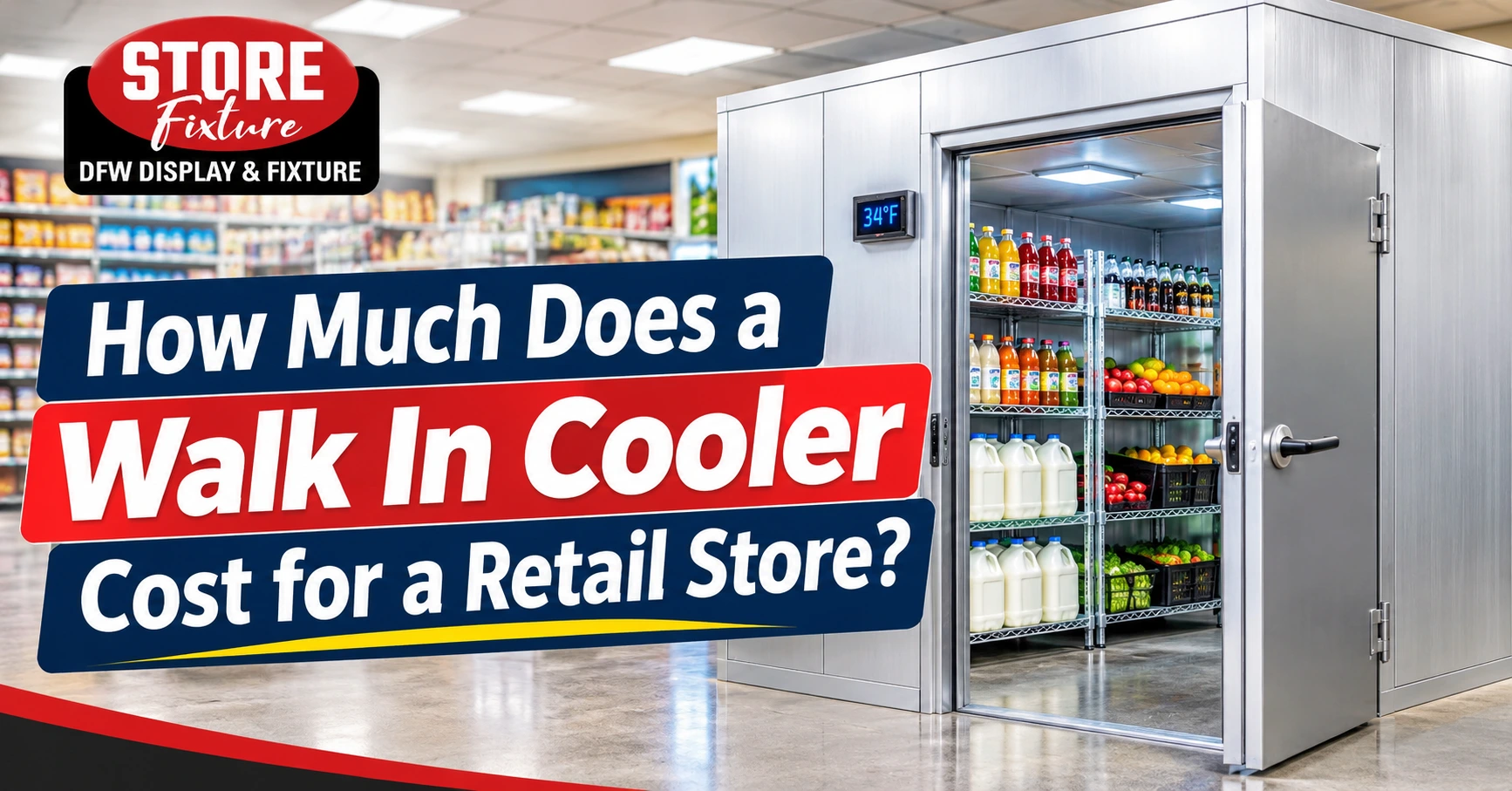
How Much Does a Walk In Cooler Cost? The Short Answer
Short answer: at DFW Display & Fixture, a custom walk-in cooler starts at $2,995 per door, and the final price is quoted after we look at your room size, door count and site conditions.
That per-door figure is the floor, not the ceiling. A two-door beer cave behind a c-store sales floor and a deep storage room for a grocery's produce and dairy are both "walk-in coolers", but they are very different builds. The quote moves with:
- The size of the box. More wall, ceiling and floor area means more insulated panel.
- The number and type of doors. Each door that opens onto the sales floor adds to the total, which is why the starting price is quoted per door.
- The floor. Some rooms sit on an existing concrete slab; others need an insulated floor.
- The installation. Access, power and how much the site needs to be prepared before the box goes in.
So when someone asks how much does a walk in cooler cost for their store, the honest answer is: start with $2,995 per door, then add the decisions below.
What Changes the Price of a Walk-In Cooler
Most buyers are surprised that the cooler box itself is only part of the story. These are the factors that move the number most.
Size and Layout
A walk-in is sized to your room, your stock levels and the way your staff moves product in and out. A taller box can hold more stacked beverage cases on the same floor area, while a deeper box gives you longer shelving runs. Because nothing is fixed, you are not paying for space you can't use, but every extra foot of wall still needs insulated panel.
Before you ask for a quote, measure the room you plan to use, including ceiling height, and note any columns, drains or doorways in the way.
Door Count and Placement
Door placement changes how the whole room works. A door centered on a short wall leaves long shelving runs down both sides. A door near a corner can free up an unbroken back wall for tall racks. If deliveries come through a separate entrance, a second door can keep drivers out of your stocking area.
For stores that sell cold drinks straight from the walk-in, glass merchandising doors on the sales-floor side turn the cooler into a display. That is the classic beer cave setup, and it is usually the biggest single cost decision after size.
Panels, Insulation and Floor
The insulated panels are what keep the cold in. Thicker, better-sealed panels cost more up front but work less hard every day. The floor matters too: a cooler on a sound concrete slab is simpler than one that needs its own insulated floor built in.
Refrigeration System
The refrigeration unit has to match the box size, how often the doors open and how warm the back room gets in a Texas summer. An undersized system runs constantly, which shortens its life and raises the electric bill. Getting this sizing right is part of the design consultation rather than something to guess at.
Walk-In Cooler or Reach-In Cooler: Which Does Your Store Need?
A walk-in makes sense once reach-in coolers can't keep up. If you are restocking the sales floor several times a day, stacking beverage cases in the back, or holding produce and dairy, one walk-in gives you a single cold space to store, sort and rotate product.
If you are not there yet, a reach-in cooler is a much smaller spend. Our 1 Door Cooler holds 12 cubic feet and our 2-Door Tall Cooler holds 39 cubic feet, so you can compare their prices with the walk-in's starting point:
| Option | Listed price | Best for |
| 1 Door Cooler (12 cu.ft.) | $799 | A single drink or dairy line near checkout |
| 2-Door Tall Cooler (39 cu.ft.) | $1,999 | A full cold-drink wall in a small store |
| Walk In Cooler (custom) | From $2,995 per door | High-volume cold storage and beer caves |
A useful rule: if you are already running three or more reach-in units and still stacking warm cases in the stockroom, it is time to price a walk-in.
Walk In Cooler Cost by Store Type
The same cooler line serves very different stores, so how much does a walk in cooler cost for one store tells you little about another. Here is how the typical decisions differ.
Convenience Stores and Gas Stations
Most c-store walk-ins are beer caves or drink coolers with glass doors facing the floor. The door count is the main cost driver, so plan the number of facings you actually need for your best-selling lines. A lit sign over the entrance helps shoppers find it; our beer cave fixtures include LED signs made for exactly that spot.
Grocery Stores and Markets
Grocers usually need storage depth more than glass doors. Produce, dairy and meat each want different shelf depths, so the internal shelving plan matters as much as the box. Our walk-in cooler food storage chart shows which foods should sit on which shelves.
Liquor Stores
Liquor stores tend to sit between the two: a customer-facing cold section for beer and ready-to-drink products, plus back storage. A combined layout with merchandising doors on one side and a storage aisle behind is common.
Restaurants and Food Service
Kitchens need easy access, wide aisles for staff carrying full cases, and shelving that keeps raw and ready-to-eat food apart. Door placement near the prep area saves steps every service.
Common Mistakes That Push the Price Up
Most budget overruns come from decisions made too early or too late, not from the cooler itself. Watch for these.
Choosing the Room Before Checking It
A back room that looks perfect can hide problems: a sloping floor, a low beam, no nearby power or a doorway too narrow for panels. Each one adds work. Walk the space with the installer before you commit to it.
Adding Doors After the Design Is Done
Merchandising doors change the panel layout and the refrigeration load. Adding two more after the drawings are finished means redrawing the room. Decide on your door count first, based on the drinks and products you actually sell cold.
Forgetting What Goes Inside
A bare box does nothing for your stock. Shelving, dunnage racks for heavy cases and a sensible aisle width all need planning. Leave enough room for staff to turn around with a full case, or restocking will slow down every day.
Ignoring the Delivery Route
If deliveries arrive through the front of the store, the cooler door position should make sense for that route. A long carry across the sales floor costs staff time on every delivery.
Every one of these is cheaper to fix on paper than after installation. That is why the answer to how much does a walk in cooler cost is always clearer after a design conversation than before it.
Installation, Power and Site Preparation
Installation is where budgets most often slip, because it depends on your building rather than the cooler.
Plan for these before you sign off on a layout:
- Panels have to get through your doors and hallways.
- The refrigeration system needs a suitable electrical supply, so check your panel capacity early.
- Location of the condensing unit. Some sites need it outside or on the roof, which adds work.
- Floor condition. A level, sound slab keeps the build simple.
- Local requirements. Ask your city whether permits or inspections apply to your project.
Because our walk-in coolers are designed and installed by the same Dallas team, the installation questions are answered during design, not discovered on install day. That is a large part of what keeps a quote accurate.
Want a number for your own room? Call 361-339-0323 or visit our showroom at 10793 Harry Hines Blvd #120, Dallas, TX 75220, Monday to Saturday, 9 AM to 6 PM.
Running Costs After Installation
When people ask how much does a walk in cooler cost, they usually mean the purchase price. The purchase price is a one-time cost. The cooler then runs every hour of every day, so it pays to think about what it costs to keep running.
- Good panels and well-sealed doors reduce how often the compressor runs. Doors left open during restocking are one of the biggest causes of wasted energy.
- Door gaskets and seals. Worn gaskets let warm air in. Check them regularly and replace them before they tear.
- Dirty condenser coils make the system work harder. Keep the area around the condensing unit clear.
- Temperature checks. Log the temperature daily. A slow drift upward is usually the first sign of a problem.
None of these are expensive on their own, but ignoring them is the fastest way to turn a reasonable walk in cooler cost into an expensive repair.
| Tier | Rack model | Facing capacity | Price | Payback |
|---|
Three Walk-In and Reach-In Coolers Worth Comparing
These three products from our catalog cover the range from a single-door reach-in to a full custom room. Prices are as listed on each product page at the time of writing, so check the product page for the current price.
1. Walk In Cooler (Custom Built to Your Room)
- Price: from $2,995 per door
- Size: built to your room's dimensions, with no fixed catalog size
- Best for: grocery, convenience store, restaurant and retail cold storage
- Why it stands out: door count and layout are planned around your space, and the same Dallas team designs and installs it
This is the option for stores that have outgrown reach-ins. See the full details on the Walk In Cooler page, then request a quote to start a design consultation.
2. 2-Door Tall Cooler (39 cu.ft.)
- Price: $1,999
- Capacity: 39 cubic feet
- Best for: a cold-drink wall in a small store, or extra capacity beside an existing cooler
If your walk in cooler cost estimate feels too high for now, two of these can carry a small store's cold drinks while you plan. View the 2-Door Tall Cooler.
3. 1 Door Cooler (12 cu.ft.)
- Price: $799
- Capacity: 12 cubic feet
- Best for: a single impulse line near the register, such as energy drinks or water
It is the lowest-cost way to add cold capacity, and it is useful even in stores that already have a walk-in. View the 1 Door Cooler.
You can compare every model in our coolers and freezers range, including freezers and open coolers.
Ways to Keep Your Walk In Cooler Cost Down
You can lower the total without buying a cooler that is too small.
- Size for next year, not five years from now. Overbuilding adds panel, refrigeration and energy costs you may never use.
- Count your doors carefully. Each merchandising door adds to the quote, so match the number to the product lines that truly sell cold.
- Use the room you already have. A space with a sound floor, nearby power and easy access is cheaper to build in.
- Plan the shelving with the box. Choosing heavy-duty storage shelving during design avoids reworking the layout later.
- Combine cooler and freezer needs. If you also need frozen storage, one combined build can share a wall instead of building two separate rooms. Our guide to walk-in freezer cost explains how freezer pricing differs.
Budget Checklist Before You Request a Quote
Bring these details to your consultation and you will get a faster, more accurate quote:
- Room length, width and ceiling height, measured at the narrowest point
- Where the room sits in the building, and how panels will reach it
- How many doors you want, and which ones face customers
- What you will store: drinks, produce, dairy, meat or a mix
- How many cases or how much product you move in a busy week
- Your electrical panel details, if you have them
- Whether you also need freezer space
With these answers, the question of how much does a walk in cooler cost turns into a specific number for your store rather than a range. Call 361-339-0323 to book a design consultation, or stop by the Harry Hines showroom to see coolers in person. We also ship fixtures throughout the United States.
Frequently asked questions
How much does a walk in cooler cost for a small convenience store?
At DFW Display & Fixture, walk-in coolers start at $2,995 per door. A small c-store cooler with only a few customer-facing doors usually sits toward the lower end, while extra doors, a larger box or more site work raise the quote.
Is a walk-in cooler cheaper than several reach-in coolers?
Not up front. A 2-Door Tall Cooler is $1,999 and a 1 Door Cooler is $799, so reach-ins cost less to buy. A walk-in becomes better value when you need bulk cold storage, a beer cave, or space to stack cases that reach-ins can't hold.
Does the price include installation?
Pricing starts at $2,995 per door, and the full quote is based on room size, door count and site conditions. Because the same Dallas team designs and installs the cooler, installation is planned into the quote rather than added as a surprise later.
How long does a walk-in cooler last?
With clean coils, sound door gaskets and regular service, a commercial walk-in cooler can serve a store for many years. Most problems that shorten its life come from neglected maintenance rather than the box itself.
What temperature should a retail walk-in cooler run at?
Most retail walk-in coolers holding drinks and refrigerated food run just above freezing, commonly between 35°F and 38°F. Check the guidance for the specific foods you store and log the temperature every day.
Can I see a walk-in cooler before I buy?
Yes. Our showroom at 10793 Harry Hines Blvd #120, Dallas, TX 75220 is open Monday to Saturday, 9 AM to 6 PM, and you can talk through your layout with the team there.